Morning vs. Night Cortisol Detox Routines: Which One You Need
Share
Here's something that doesn't get talked about enough: cortisol has a schedule. It peaks in the morning to get you out of bed, and it's supposed to be at its lowest point when you're trying to sleep. The entire system has a built-in rhythm — and most of our habits are working directly against it at both ends of the day.
The question isn't 'do I need a cortisol routine' — it's 'which end of the day do I need to fix first?'
Understanding the Curve
Cortisol rises sharply after you wake up, peaks within the first hour or two, and gradually declines throughout the day, hitting its lowest point near bedtime. When this curve gets disrupted — either the morning peak gets amplified into anxiety, or the evening decline doesn't happen — that's when you start feeling the effects in your body and your face and your cravings and your sleep.
The Morning Routine: Work With the Peak
Your cortisol is rising in the morning because it's supposed to. Your job isn't to suppress it — it's to not add more fuel to a fire that's already doing its job.
- Get natural light within 30 minutes of waking — this anchors your circadian rhythm and helps cortisol peak and then decline on schedule
- Drink water before caffeine — your cortisol is already elevated, give it a moment
- Eat a protein-forward breakfast within an hour of waking
- Delay caffeine 60 to 90 minutes if you can — let your body's natural energy do its thing first
- Resist the urge to check email or news the second you open your eyes — the inbox will still be there in 20 minutes
|
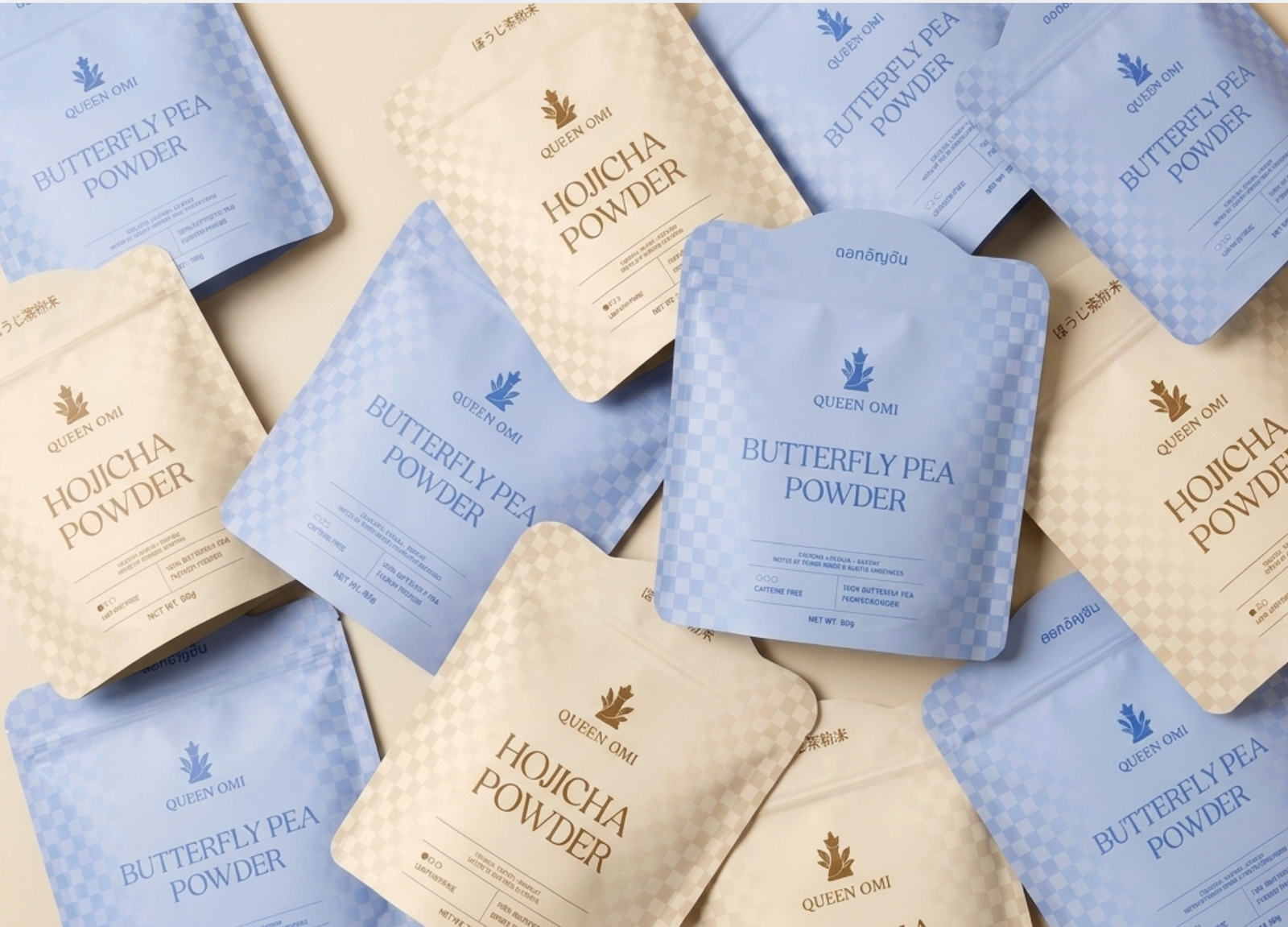
🍵 Queen Omi Organic Hojicha Okay, I need you to hear me on this. Hojicha is roasted Japanese green tea — low caffeine, rich in L-theanine, and it actually tastes incredible. This is what I reach for instead of that third coffee. It gives you the ritual without wrecking your nervous system. Trust me on this one. [Shop Queen Omi Organic Hojicha →] |
The Night Routine: Help the Decline Actually Happen
By evening, cortisol should be fading on its own. Your entire job is to stop interrupting the process.
- Dim your lights at least an hour before bed — artificial light signals your brain that it's still daytime
- No stimulating work conversations or email in the final hour
- Choose a calming, caffeine-free drink as your last beverage — this is where the ritual becomes powerful
- Consistent bedtime, even on weekends — I know, but it matters more than almost anything else on this list
- A short breathing or stretching practice — not because it's trending, because it works
|
💙 Queen Omi Organic Butterfly Pea No caffeine. Packed with antioxidants. And it literally turns purple when you add lemon — I'm not joking, that's just what it does. Make this your evening ritual and tell your cortisol the workday is officially over. [Shop Queen Omi Organic Butterfly Pea →] |
Which Do You Actually Need More?
|
If You Mostly Struggle With... |
Start Here |
|
Feeling anxious and wired from the moment you wake |
The morning routine |
|
Trouble winding down, racing thoughts at night |
The night routine |
|
Honestly, both |
Start with sleep — it affects the entire curve |
The Bottom Line
Your stress response has a rhythm. Build a routine that matches it — grounding in the morning, calming at night — and you're working with your biology instead of against it. Not a complete life overhaul. Just alignment.
This article is for educational purposes only and is not a substitute for professional medical advice. If you think you have a hormone imbalance or are dealing with chronic stress symptoms, please talk to a licensed healthcare provider.